Sample site. Aangan Seven does not exist. Built by Jinova Systems to show what a family homestay's website can do. The house, the family, the rooms, the neighbours who run the days out, the guestbook and the weather are invented. Imagery is generated.
Aangan SevenNATHUAKHAN · KUMAON Ask Meera

A family house that lets seven rooms

Girish grew fruit for thirty one years. Meera taught geography.

Neither of them meant to run a homestay. The hailstorm in April 2018 took the crop, both children had already left, and there were five empty rooms above a kitchen that was still cooking for eight.

Nathuakhan village, above the Ramgarh road · Uttarakhand · about 1,900 m

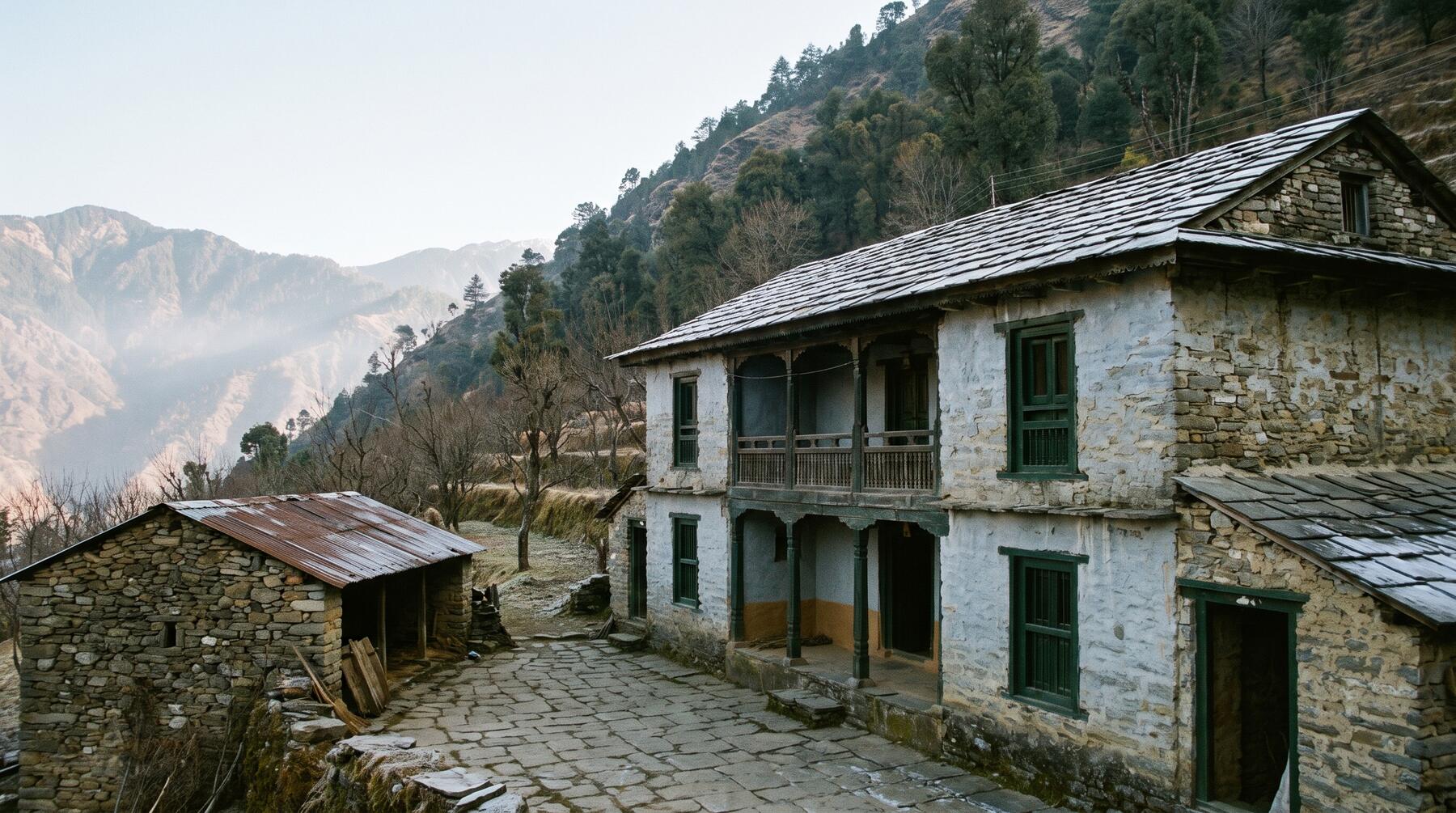
The stone house at Aangan Seven seen from the orchard below it on a clear morning
The house from the bottom of the orchard. The tin roof on the left is the byre, which is room 07.

The family

Four people run this, and you will meet three of them.

Girish Pant was a horticulture officer in the state fruit belt from 1988 until he retired in 2019, most of it spent telling other people how to prune trees he could not see. The orchard behind the house is his. His grandfather planted the first apricots in it.

Meera Pant taught geography at a school in Nainital for twenty nine years. She answers the phone and she writes the replies to everything sent from this page. She is also the one who will tell you not to come in the last week of July.

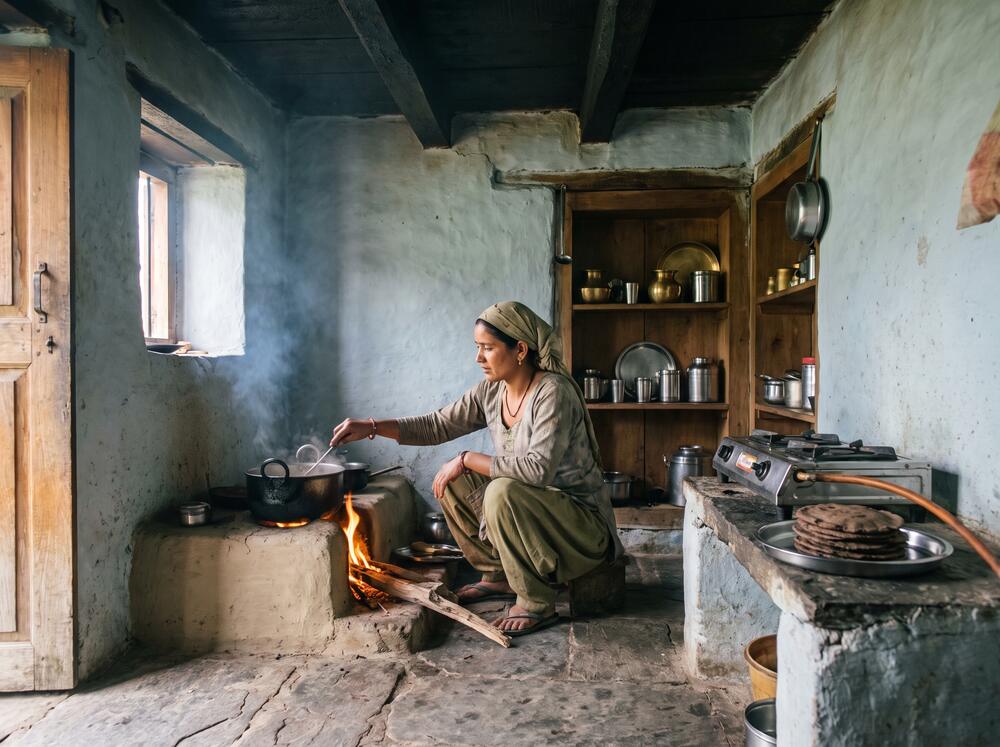
Nandini Pant came back in 2021. She spent six years as a pastry cook in a hotel kitchen in Gurugram and now runs a kitchen with one gas ring and a wood chulha, which she says is harder and does not mean it as a compliment.

Kamla Devi cooks three mornings a week and has done since before any of this started. Bhuwan Rawat drives, carries bags up from the road, and is the only reason the water pump still works.

Registering the house as a homestay was Nandini's idea. Girish was against it for a year, on the grounds that a house with strangers in it is not a house. He has not said that since about 2022, though he has not said the opposite either.

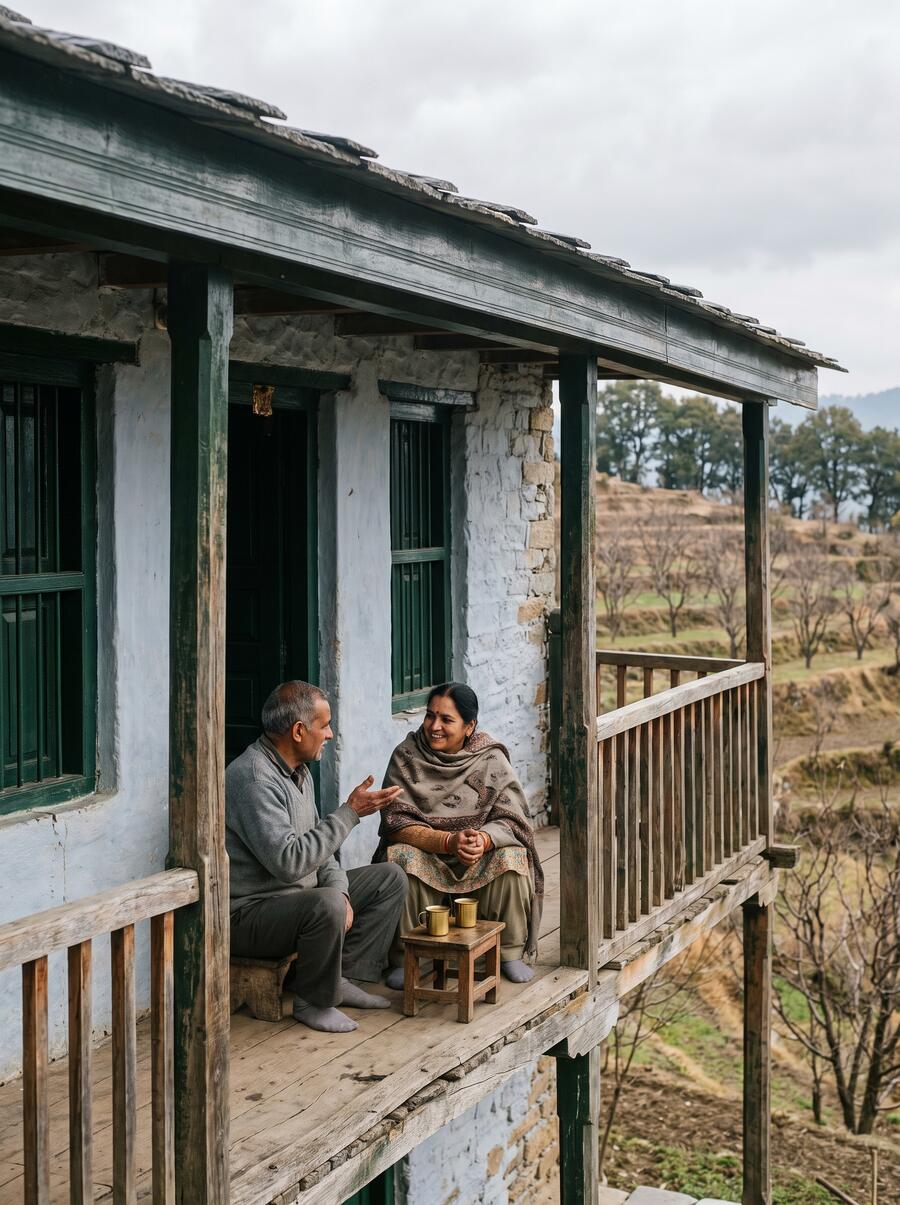
Meera and Girish Pant sitting on the wooden veranda of their house in the morning
Meera and Girish on the veranda, which is where breakfast happens unless it is raining.

The rooms

Seven, and they are not equal.

Three of them are good. Two are fine. Two are small, and we would rather say so here than have you find out at nine at night with the bags already up the stairs. Two of the seven share a bathroom across a landing. One is across the yard.

You can ask for a room by number. Whether you get it depends on who is already in the house and how many of you there are. If we cannot give you the one you asked for, Meera will tell you which one you are getting, and why, before any money changes hands.

01

The Front Room

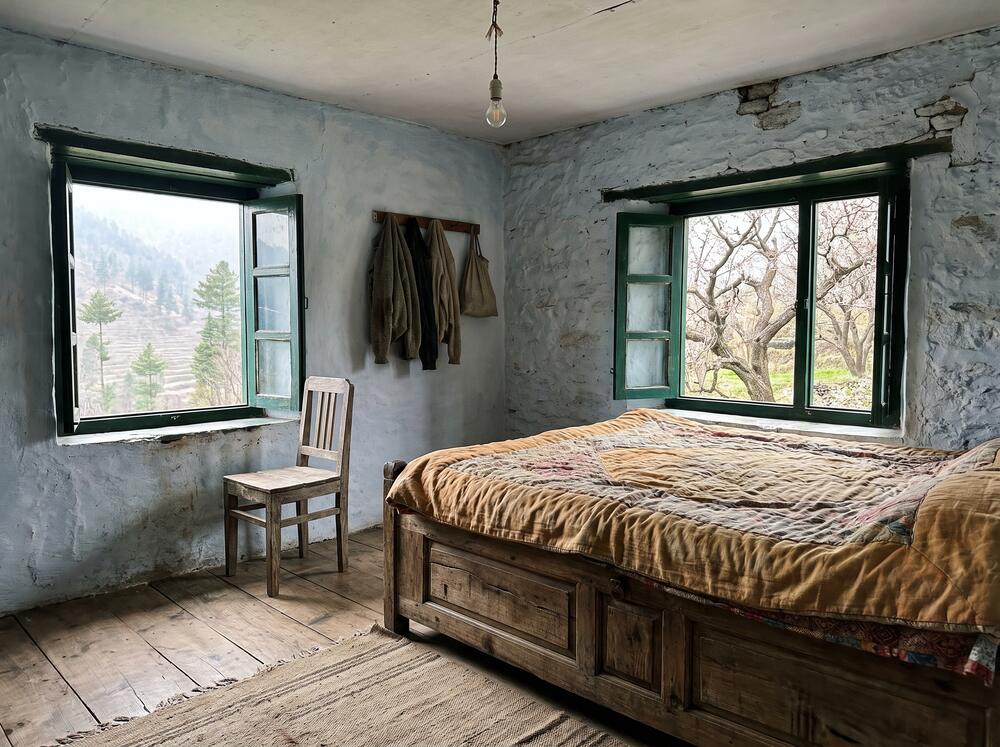
First floor, corner, two windows: one down the valley and one into the orchard. The bed was made out of an almirah that fell apart in the nineties. Bathroom inside, geyser, shower over the drain, no tub.

It is the warmest room in the house in December because the kitchen chimney runs up inside the wall behind the headboard.

The catch It is directly above the kitchen. Kamla lights the fire at twenty to six and you will know about it.

02

The Second Front Room

Next door, the same view, about a third smaller, and the bed is a double rather than a king. Its own bathroom. In practice this is the room most couples end up in and almost nobody complains about it.

The catch The wall between 01 and 02 went in during the eighties and it is a partition, not stone. You will hear the room next door turn over in bed.

The Front Room, with a wooden bed, a window onto the valley and a window onto the orchard
Room 01. We have photographed three of the seven properly. The other four are the ones we would rather describe than flatter.

03

Nandini's Old Room

First floor at the back, facing the hill, which means oak, mist and no view whatsoever. It is the coolest room in the house in June and it is dark until about eleven. Her school books are still on the shelf because she will not let anyone take them down.

The catch No view, and the bathroom is across the landing, shared with 04. We only put two parties in 03 and 04 at once if they arrived together.

04

The Sorting Room

Ground floor, stone floor, two single beds. Apricots were graded in here every June until 2018, and it is the only room with a door straight out into the yard. Very quiet. Very cold in January, in a way people find romantic for about one night.

The catch Shares the landing bathroom with 03. In June it still smells faintly of fruit. Most people like that. One guest did not, and wrote so in the book.

05

The Small Back Room

A single. Nine feet by eleven. A bed, a chair, a hook, and a window at head height that looks at the hillside. It costs the least of anything we have and it is the room we keep for people travelling alone who told us they came here to read.

The catch It is small. That is written three times on this page because people book it anyway and are surprised.

06

The Room on the Roof

Built on the terrace in 2016, so it is the newest room and the only one where the plumbing was designed rather than added afterwards. Its own bit of terrace. The best light in the building arrives here at about four in the afternoon and stays until the ridge takes the sun.

The catch It is a timber and tin room on a roof in the Himalaya. In June it holds the day's heat until nine at night. In January it is the coldest room we have, and if you try to book it for January we will say so before you send any money.

07

The Byre

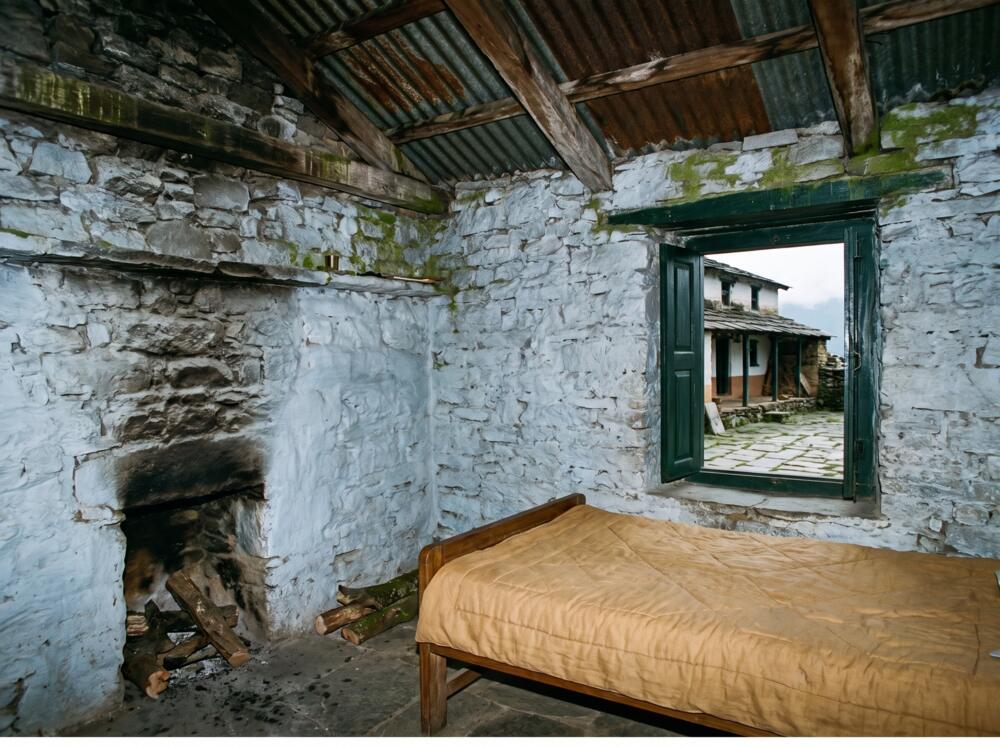
Across the yard, converted from the cattle shed in 2021. Thickest walls in the property, its own fireplace, and the only room where you cannot hear the house at all. Sleeps two, with a mattress that comes out for a child.

The catch Forty paces across an open yard to breakfast, and the yard is flagstone, which in monsoon is slick enough that Girish has fallen on it. Not the room to take if wet stone or a torch at night is a problem.

The converted byre across the yard, with thick stone walls, a fireplace and a low bed
Room 07, the byre. The fire is laid in the afternoon; lighting it is your job and Bhuwan will show you once.

Before you ask

What this house is not.

A homestay that behaves like a small hotel is a bad hotel. It is easier for everyone if the gaps are written down before you arrive rather than explained afterwards.

  • There is no reception. At two in the afternoon somebody is in the kitchen. At midnight you would have to knock, and we would rather you did not arrive at midnight.
  • There is no room service. Food leaves one kitchen at set times. Chai at seven, breakfast eight to half nine, lunch at one if it was asked for by ten, dinner at half seven. Everyone eats at the same table.
  • There is no lift, and only room 04 is on the ground floor. The stairs are stone, the fourth tread is uneven, and the top flight has a rope where a banister should be.
  • There is no card machine. UPI or cash. The nearest ATM is in Bhowali and it is often out of money.
  • There is no bar. Bring your own if you want it. Bhuwan will not be sent to buy it.
  • The wifi is a 4G router bolted to the roof. It carries email, WhatsApp and a phone call. It does not carry a video meeting with fourteen people on it. We have watched someone try.
  • There is no air conditioning, and at this height there has never been a reason for one. There are quilts, and there is a heater in every room except 04.

If any of that is a problem, it is better raised now than at the gate. Write to Meera and ask.

The table

One kitchen, one table, one menu a day.

Whatever Nandini and Kamla cook is what there is. Pahadi and vegetarian most days: bhatt ki churkani, gahat ke dubke, madua roti, whatever the orchard or the Thursday van has produced. Chicken on a Saturday if enough people said yes by Thursday.

Dinner is at half past seven and everyone sits down together, including whoever of us is not cooking. If that is not what you want on holiday, say so when you write and we will lay a table for you on the veranda instead. Nobody minds. It happens perhaps twice a month.

Tell us about allergies, jain food, or a child who will only eat one thing, when you write rather than when you arrive. There is no second kitchen to fall back on.

Nandini cooking at the wood chulha in the homestay kitchen
The chulha does the slow things and the gas ring does everything else.

Days out

Four people who live within a kilometre of this house.

This is the part a homestay actually sells. Everything below is run by somebody local, you pay them directly, and we take nothing from it. If one of them cannot come we will tell you, rather than quietly send somebody else.

All four of these people are invented, and so are their prices, for a house that does not exist. Nathuakhan is a real village and nobody who lives in it has been named here. On a real property Prakash, Sarita and Deepa would be the family's actual neighbours, named with their permission, and the money would genuinely go to them.

The ridge before breakfast

Prakash Negi

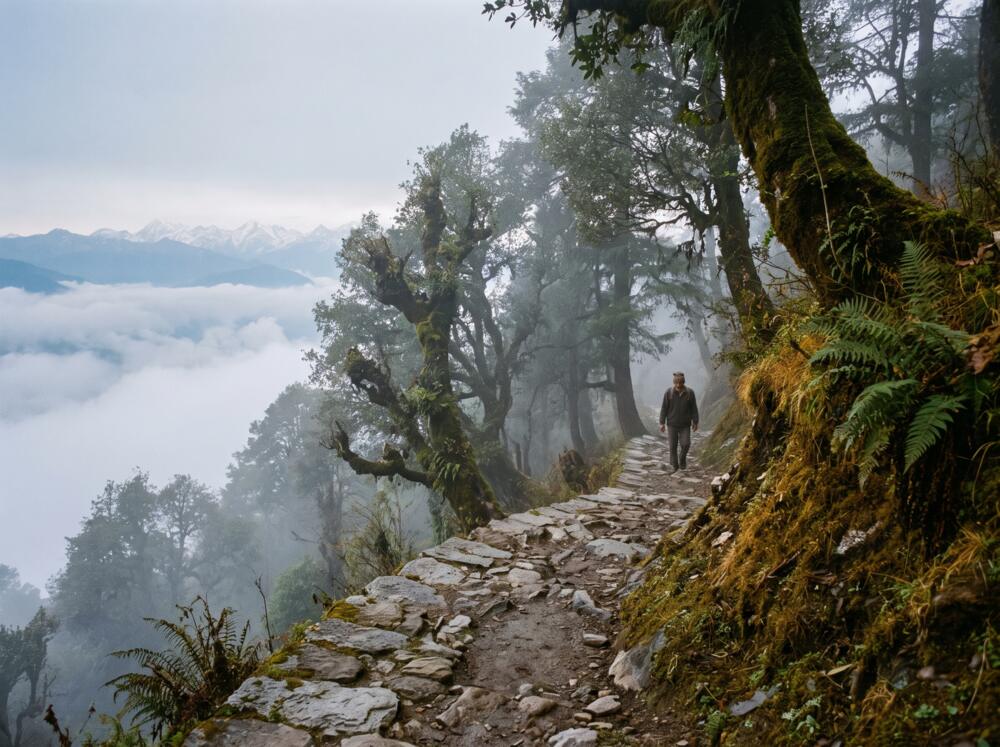
Leaves the gate at ten to six, back by nine. About nine kilometres along the ridge and down through the oak, with a stop where the whistling thrushes are. Prakash has walked this since he was a boy and he does not hurry for anyone.

Rs 700 a person, four people at most, paid to Prakash. He will not take you if the cloud is down, because there is nothing to see and the path is wet stone.

Dinner in her own kitchen

Sarita Devi

Ten minutes down the path, in her house, on her wood fire. Four guests at a time and no more, because that is how many will fit. Vegetarian, and she does not cook it any other way, and she will feed you until you are rude about stopping.

Rs 600 a person, paid to Sarita. Two days' notice, because she buys for it.

Ringal, which is hill bamboo

Deepa Arya

Two hours at the back of her father's workshop learning to split and weave ringal. You will make something lopsided and you will take it home. Children over about ten manage this better than adults do.

Rs 900 a person including the ringal, paid to Deepa.

The orchard, with the man who planted half of it

Girish Pant

An hour among the apricot and plum, mostly about pruning and grafting, some of it about the 2018 hail and what it does to a family that has one crop. He offers this to everybody and about a third of guests take it.

No charge. He would be doing it anyway.

A narrow path along an oak ridge at first light, above cloud in the valley
The ridge at about half past six. On maybe one morning in three the cloud sits below you.

There is no spa, no yoga at dawn, and no bonfire with a guitar. If those are what the trip is for, there are properties near Mukteshwar that do them properly. If they are not, tell Meera which of these you want when you write, because Prakash and Sarita both need notice.

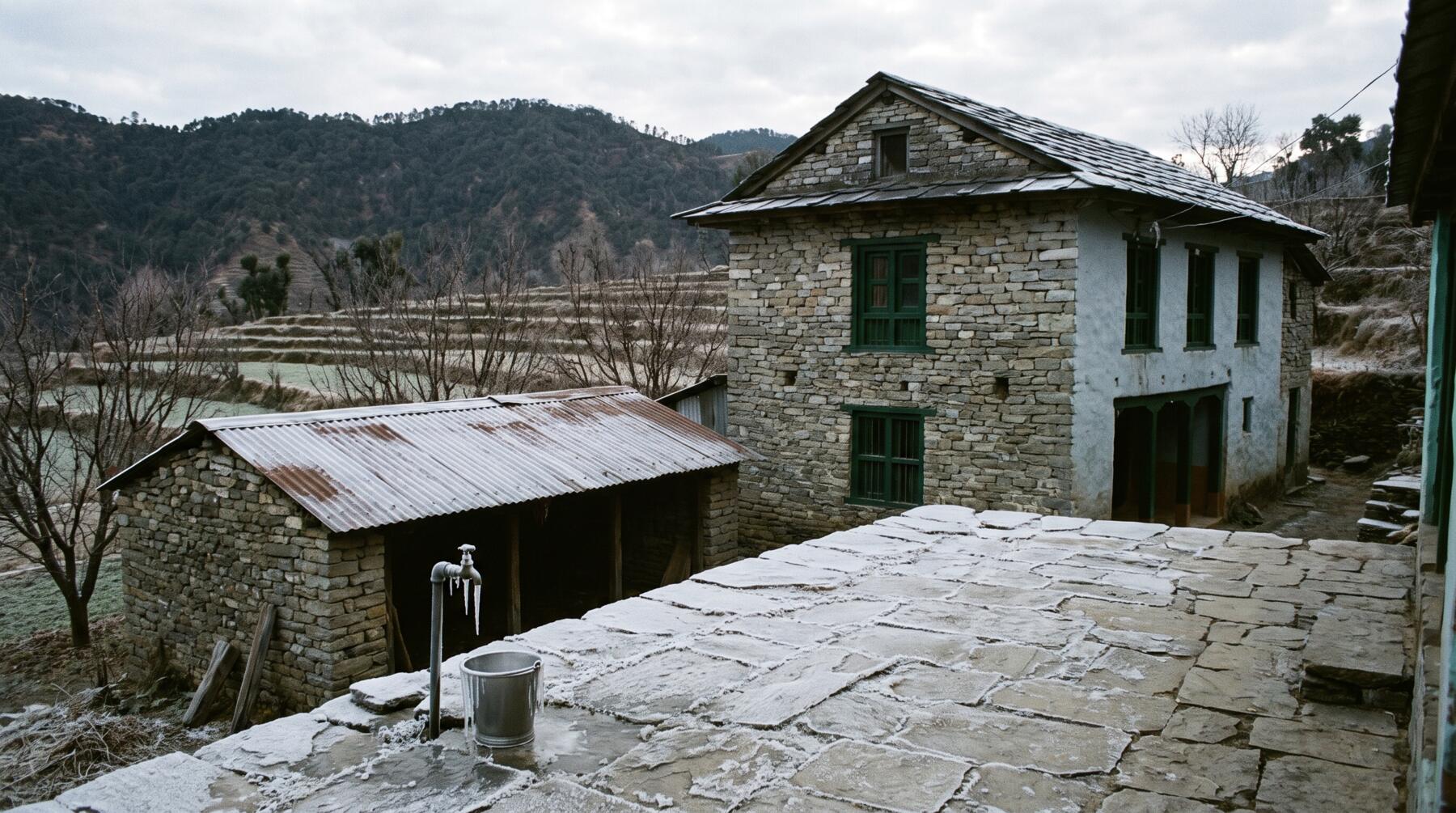
Frost on the flagstone yard and the byre wall on a January morning

In January the pipes freeze between six and nine in the morning.

We have never pretended otherwise, and the people who come in January come because of it.

The year here

Twelve months, and two of them we will talk you out of.

A homestay's real question is not whether a room is free. It is whether this is the right month to be standing in the yard. So here is every month, including the ones that lose us the booking.

This calendar is invented, for a property that does not exist. On a real homestay it is written from the family's own years and it is the section guests trust most, because no OTA listing carries a month that says do not come.

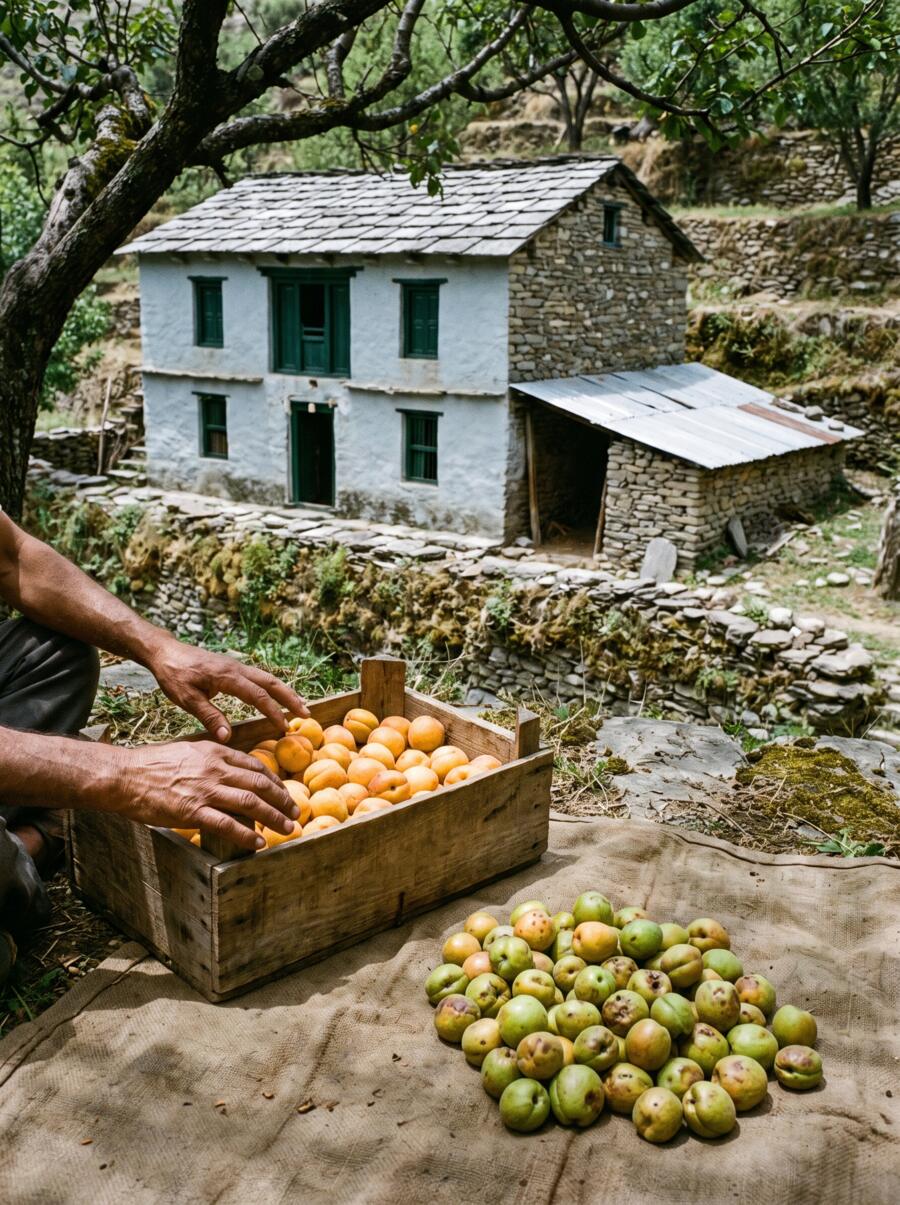
Apricots being sorted into crates under the trees in June
June. What is left of the crop after the birds and the hail get their share.

January

Come, but know this

Degrees C
Minus 2 to 12. Frost in the yard most mornings, sun on the veranda by nine.
The orchard
Bare. Girish prunes all month and will hand you a saw if you stand still long enough.
Water
The pipes freeze between six and nine. A bucket is filled the night before and left in every room. That is the arrangement, not a fault.
Nandini cooks
Gahat ke dubke, madua roti, and whatever came up on the Thursday van. Heavy food, because you will want it.
The road
Reliable, unless it snows. Then the Ramgarh road can be shut for a day or two and nothing comes up or goes down.
Meera says
Come if the cold is the point, and many people do. Rooms 04 and 06 are out of use and we will not let you book them.

February

Come

Degrees C
Minus 1 to 15. The cold breaks somewhere in the last week and you can feel the day it happens.
The orchard
Buds swelling on the plum by about the twentieth. Nothing open yet.
Water
Still freezing most mornings at the start, rarely by the end. Same bucket.
Nandini cooks
The last of the winter cooking, and the first green things from the terrace behind the byre.
The road
Fine. Snow is possible and uncommon.
Meera says
The quietest month of the year and the one we would pick if you want the house more or less to yourself.

March

Come

Degrees C
Five to 21. Cold, clear nights. This is the sky people come for.
The orchard
Blossom. Plum first, apricot about a week behind it. It lasts perhaps twelve days and we cannot tell you which twelve.
Water
No trouble.
Nandini cooks
Full range again. Nandini starts making things with the last of the stored walnuts before they turn.
The road
Fine.
Meera says
The best looking month here. If you only ever come once, come now or in October.

April

Come

Degrees C
Eight to 25. Warm afternoons, cold at four in the morning.
The orchard
Fruit setting. This is also the hail month. The 2018 storm that ended the orchard as a living came on the ninth of April.
Water
No trouble.
Nandini cooks
Nettle, first cucumbers, and a lot of curd.
The road
Fine.
Meera says
Come. Understand that the family watches the sky all month and is only half listening for a fortnight of it.

May

Come, but know this

Degrees C
Twelve to 28. Hot in the sun, cool the moment you step inside stone.
The orchard
Fruit sizing. Nothing to pick yet.
Water
The spring is at its lowest before the rain. We run the geysers on a rota, roughly an hour a room, and ask you to take the hot water when it is your turn.
Nandini cooks
Light food, because nobody wants dubke at this temperature.
The road
Fine, and busier than you expect. This is the Delhi holiday month.
Meera says
Come, but book early and do not take room 06. It is timber and tin on a roof and it holds the day.

June

Come

Degrees C
Fourteen to 29 until the rain arrives, usually in the last week.
The orchard
Apricots from about the tenth. The yard smells of them and so, faintly, does room 04.
Water
Lowest of the year until the monsoon breaks. Geyser rota still on.
Nandini cooks
Apricot in everything, some of it more successful than the rest. Nandini is at her best and her worst in June.
The road
Fine until the rain starts, and then see July.
Meera says
The month guests remember. Room 06 holds the heat until nine at night, so take 07 or 03 if you sleep badly warm.

July

Do not come

Degrees C
Sixteen to 24. Wet, and the air is the best it is all year.
The orchard
Leeches on the forest path from the first week. Not dangerous, and genuinely unpleasant.
Water
Plentiful, and muddy for about a day after heavy rain.
Nandini cooks
Lingra and monsoon greens, which are worth the trip on their own if the rest of this did not exist.
The road
Landslip closures on the Ramgarh road, sometimes for half a day, occasionally longer. The last four hundred metres of path is slick stone.
Meera says
Do not come, and we say so to more people in July than in the rest of the year put together. The last week is the one Meera argues hardest about.

August

Do not come

Degrees C
Sixteen to 24. Same as July with more of it.
The orchard
Everything green, everything growing mould, including two of the quilts one year.
Water
No shortage. Occasionally cloudy in the tap for a day.
Nandini cooks
As July. The Thursday van is unreliable, so the menu is shorter than usual.
The road
Worse than July, on average. Assume one day of the trip is lost to the road and you will not be disappointed.
Meera says
Do not come, unless you have been here before and know exactly what you are choosing. Two guests do this every year on purpose.

September

Come, but know this

Degrees C
Fourteen to 26. The rain thins after about the tenth.
The orchard
Second flush of green, walnut coming in at the end of the month.
Water
No trouble.
Nandini cooks
Back to the full menu, and the first of the new rice from the terrace fields below the village.
The road
Recovering. Ask before you set out in the first ten days, because a closure from August can still be being cleared.
Meera says
The second half only. The first ten days are still monsoon whatever the calendar says.

October

Come

Degrees C
Eight to 24. The clearest air of the year by a long way.
The orchard
Apple and walnut. The orchard is being picked over rather than harvested.
Water
No trouble.
Nandini cooks
Apples, walnuts, and the pickling that goes on all month in the corner of the kitchen.
The road
Fine.
Meera says
The month Meera would pick. Snow peaks from the ridge on maybe one morning in three and almost nobody is here to see them.

November

Come

Degrees C
Three to 20. Brilliant days, and it is properly cold once the sun goes behind the ridge at about half past four.
The orchard
Leaf down. The valley opens up because the oak has thinned.
Water
No trouble yet. The geyser starts to matter.
Nandini cooks
Heavier again. This is when the gahat and the bhatt come back.
The road
Fine.
Meera says
Empty, clear and cold, and that is the whole recommendation. Bring one more layer than you think.

December

Come, but know this

Degrees C
Zero to 15. Frost from about the middle of the month.
The orchard
Bare. Pruning starts.
Water
The pipes begin to freeze in the last ten days. Bucket arrangement resumes.
Nandini cooks
Winter cooking, and Nandini bakes, which she does not do the rest of the year.
The road
Fine unless it snows.
Meera says
Christmas week fills and the rest of December is empty. Room 06 is out from about the twentieth.

The book in the hall

We do not have a rating. We have a book.

These four entries were written by us for a house that does not exist. A real homestay would photograph the actual page, or link its Google reviews, and would never let a web agency compose them. Aangan Seven has no OTA listing and therefore no score out of ten, which is a real thing about small properties rather than a design choice.

Room 05 is exactly as small as they say it is, and I finished two books in it.
Anand K., Kolkata · November
We were given 02 instead of 01 and told why on the phone a week beforehand. Nobody does that.
Ruth and Peter M., Norwich · October
The walk with Prakash was the best morning of our year. The leeches in July were not.
Sneha D., Mumbai · July
Girish talked about pruning for an hour and I have thought about it every week since.
Vikram J., Delhi · March

Plain facts

Getting here, and the paperwork.

Distances

Kathgodam railhead
62 km, 2 hr 15
Pantnagar airport
100 km, 3 hr
Delhi, by road
330 km, 8 to 9 hr
Mukteshwar
14 km, 40 min
Bhowali, for the ATM
21 km, 50 min

Check in, check out

Rooms ready from
Noon
Rooms wanted back by
10 am
Latest sensible arrival
8 pm

The last four hundred metres

A car cannot reach the house. Drivers stop at the Nathuakhan turn and it is four hundred metres down a stone path with about sixty steps in it. Tell Meera your arrival time and Bhuwan will be at the turn for the bags. In July and August the path is slippery and we mean it.

Owner occupancy and registration

Girish and Meera live in the two rooms behind the kitchen. That is not a charming detail, it is a condition: Uttarakhand's homestay scheme requires the owner to live in the house. Homestays in India are governed by state policy rather than one central law, so what is true here is not what is true in Himachal or Kerala. Registered under the state scheme since 2019, which, like the rest of this page, is invented.

Form C, ID and GST

Every foreign national is reported to the Bureau of Immigration within twenty four hours of arrival, one form per person, including both halves of a couple. So we need the passport and the visa page before you arrive; a photograph of each is fine. Indian guests, one government ID per adult. GST at 12% is added to the tariff and Meera's reply shows it on its own line. Nothing else gets added afterwards.

Cancelling, children, the dog

Cancel a week ahead and we forget about it. Inside two days we will ask for one night, because at seven rooms an empty one is a seventh of the house. Children of any age, though think about the stairs and the yard. There is a dog, Bhaal, who is old and entirely indifferent to you. We cannot take other dogs because of him.

Ask us

There is no booking system. There is Meera.

Tell us when, how many of you, and what you need. It writes a WhatsApp message and sends it to the phone in the kitchen. Meera answers it herself, usually the same evening, sometimes the next morning if the power has been off.

Rooms run between about Rs 2,200 and Rs 4,200 a night, depending which room and which month. That is a band and not a rate card: Meera quotes the figure in her reply, once she knows which rooms are free that week.

This holds nothing and books nothing. It is an enquiry, and a person reads it. Tariff is quoted in the reply, with GST at 12% shown separately.

The message it writes carries your dates, how many of you, and what you asked for. It carries no price at all, which is the point rather than an omission: nobody has quoted you anything yet, and we will not until we know which rooms are free that week. If WhatsApp is not how you want to do this, the number rings as a phone between eight in the morning and nine at night.

Jinova Systems, speaking as ourselves. Not part of the sample.

At seven rooms the commission is not the expensive part. The phone number is.

Every other sample on this site argues from arithmetic, because at eleven rooms or forty two beds or forty eight rooms the arithmetic is the argument. Here it is not. A house this size lives on people who come back and people they tell, and that is a question about who owns the relationship, not about percentages.

Booked through an OTA

The guest is theirs.

They hold the email address and the phone number. Next March that guest gets a mail about hill properties in Kumaon, and yours is one of forty in it, sorted by price. Meera finds out that they came back only if they book again, through the same channel, and pay the commission again.

Written to Meera

The guest is yours.

The number is in her phone, in a thread that already contains what they eat, which room they had, and that they walk in the mornings. Next March she writes to them. That costs nothing, works better, and is the only marketing a seven room house has ever had.

The money is real but it is the smaller half. Five nights in two rooms at ₹2,800 is ₹28,000. Through an OTA at 17% the house keeps ₹23,240; taken here, after about 4.2% in payment and hosting, it keeps ₹26,824. That is ₹3,584 on one booking. This house takes roughly 115 bookings of that size a year, and if 60% arrive through a channel and one in three of those moves onto your own page, it is about ₹82,000 a year. Not a transformation. The byre conversion, paid for a second time, annually.

Which is also why we would not sell this property a booking engine. At seven rooms a WhatsApp thread and a wall calendar hold until you start losing enquiries you never saw. When that changes, eZee Centrix and Djubo are built and priced for houses this size, and we integrate one rather than build one.

Talk to us